

L’ESPRIT
DE GENÈVE
L’ESPRIT
DE GENÈVE
L’ESPRIT
DE GENÈVE
At great turning points in history, societies
return to their founding principles.
At great turning points in history, societies
return to their founding principles.
At great turning points in history, societies return to their founding principles.
The Spirit of Geneva is one of them.
The Spirit of Geneva is one of them.
The Spirit of Geneva is one of them.
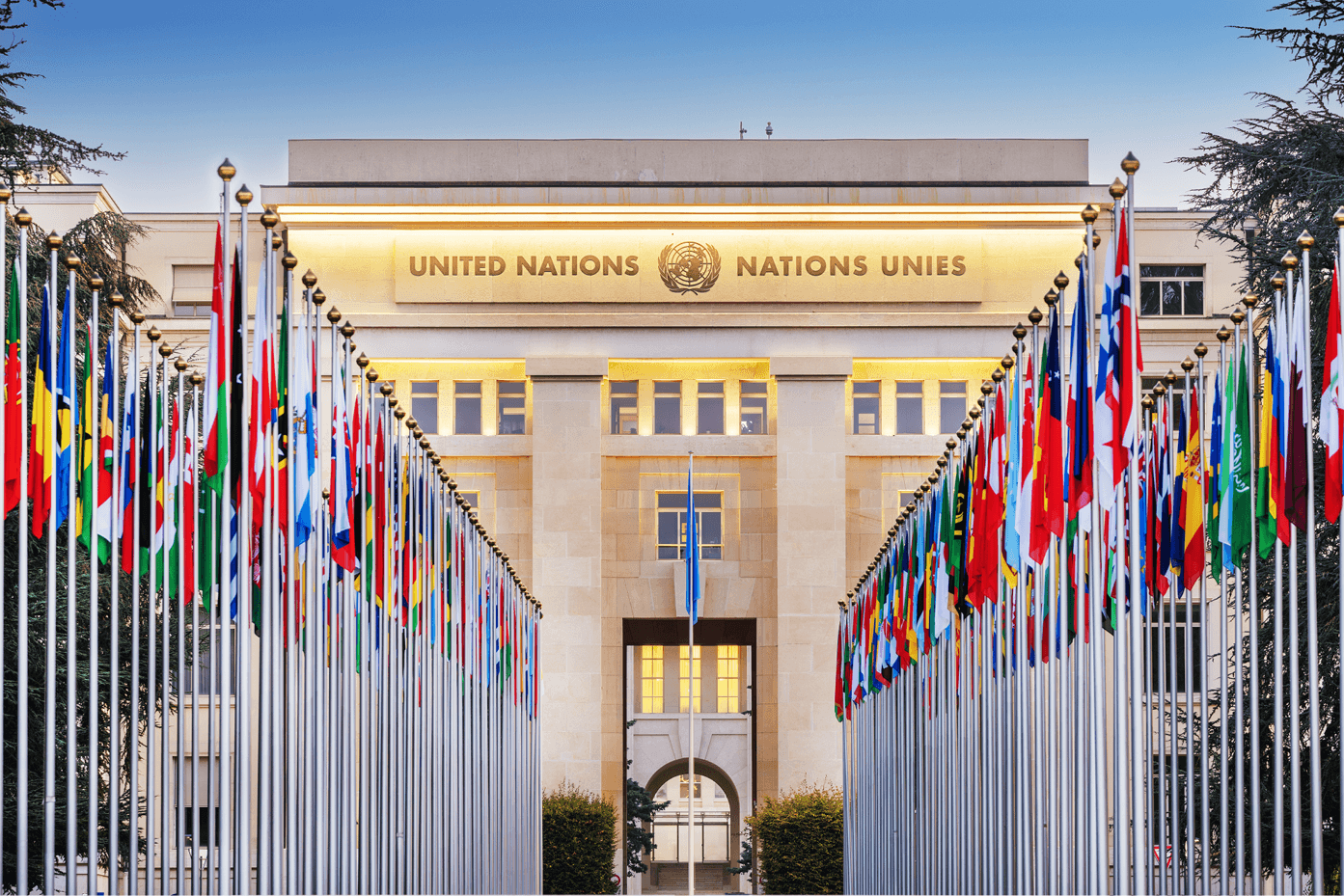
Why now
The United Nations turned eighty in June 2025.
This milestone marks the end of a founding generation. It calls for renewal. For reform.
After more than eight decades of a multilateral order built on the rule of law and international law, the balance of power is shifting. The rise of imperial powers and the growing fragility of small nations—who know they can disappear—signal a profound rupture.
In moments of upheaval on such a scale, societies return to the matrices that shape their identity and sense of belonging.
The Spirit of Geneva is one of them.
Why now
The United Nations turned eighty in June 2025.
This milestone marks the end of a founding generation. It calls for renewal. For reform.
After more than eight decades of a multilateral order built on the rule of law and international law, the balance of power is shifting. The rise of imperial powers and the growing fragility of small nations—who know they can disappear—signal a profound rupture.
In moments of upheaval on such a scale, societies return to the matrices that shape their identity and sense of belonging.
The Spirit of Geneva is one of them.
What is the Spirit of Geneva
A culture. A civic mystique. A distinctive method of addressing the tensions of a world that rarely finds equilibrium.
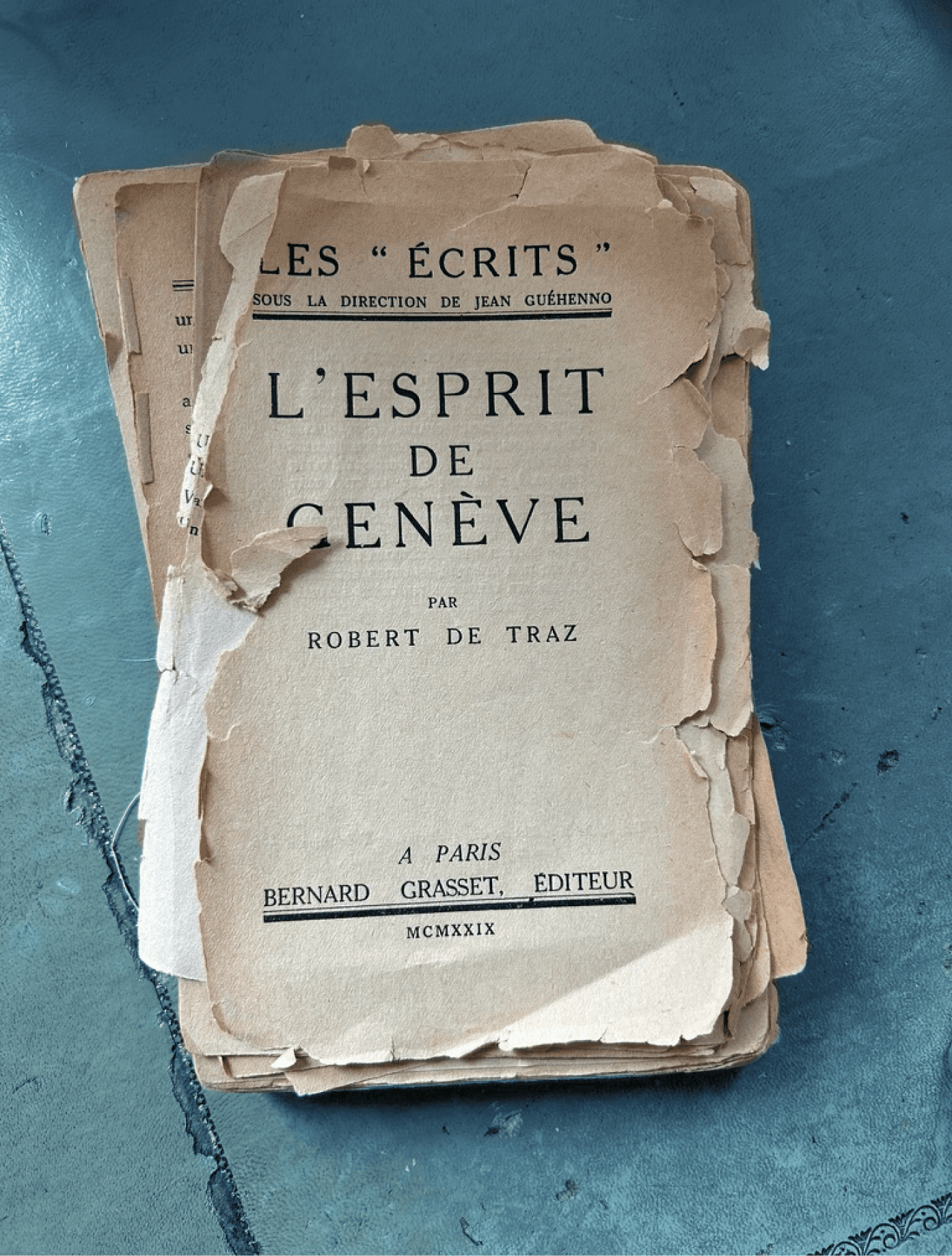
The Spirit of Geneva is also the title of a book published in 1929 by Robert de Traz, at a moment when the international system built around the League of Nations was already beginning to falter—long before a new form of multilateralism would eventually emerge.
At its core, the Spirit of Geneva rests on a set of cardinal values shaped by history, the product of a long and subtle weaving of ideas and principles.
What is the Spirit of Geneva
A culture. A civic mystique. A distinctive method of addressing the tensions of a world that rarely finds equilibrium.
The Spirit of Geneva is also the title of a book published in 1929 by Robert de Traz, at a moment when the international system built around the League of Nations was already beginning to falter—long before a new form of multilateralism would eventually emerge.
At its core, the Spirit of Geneva rests on a set of cardinal values shaped by history, the product of a long and subtle weaving of ideas and principles.
What is the Spirit of Geneva
A culture. A civic mystique. A distinctive method of addressing the tensions of a world that rarely finds equilibrium.
The Spirit of Geneva is also the title of a book published in 1929 by Robert de Traz, at a moment when the international system built around the League of Nations was already beginning to falter—long before a new form of multilateralism would eventually emerge.
At its core, the Spirit of Geneva rests on a set of cardinal values shaped by history, the product of a long and subtle weaving of ideas and principles.
The book as a tool
This book, written by Robert de Traz, tells the story of an unusual intellectual journey.
A Genevan writer of French origin through his mother, de Traz first trained in commercial studies in Paris before turning to literature, where he established himself as both a novelist and an essayist. His work and intellectual engagement eventually earned him election as a foreign member of the Royal Academy of French Language and Literature of Belgium.
From 1920 to 1929, he directed the Revue de Genève, which he envisioned as a forum for dialogue and reflection in the fragile years following the First World War. At a time when Europe was searching for ways to rebuild trust and cooperation, the review brought together voices from across the continent. It was in this context that de Traz published, in 1929, L’Esprit de Genève. Written in French, the book distilled nearly a decade of reflections developed through the pages of the review.
Carrying the hopes of an earlier generation, and already sensing the limits of a fragile multilateral order, the book soon faded into obscurity. For decades, it remained largely forgotten—surviving only in a handful of scholarly libraries and rare private collections, quietly gathering dust.
Its rediscovery came almost by accident. In 2020, Bruno Roche arrived in Geneva with his family to launch an initiative focused on the Economics of Mutuality. He was hosted by one of Geneva’s historic families in a quiet house in the heart of the Old Town. There, through a coincidence that seemed almost providential, he encountered the expression “Spirit of Geneva.” He also learned that Robert de Traz had once lived at the very same address—perhaps even in the same apartment. It was there that Roche came across a copy of the original 1929 edition.
The book as a tool
This book, written by Robert de Traz, tells the story of an unusual intellectual journey.
A Genevan writer of French origin through his mother, de Traz first trained in commercial studies in Paris before turning to literature, where he established himself as both a novelist and an essayist. His work and intellectual engagement eventually earned him election as a foreign member of the Royal Academy of French Language and Literature of Belgium.
From 1920 to 1929, he directed the Revue de Genève, which he envisioned as a forum for dialogue and reflection in the fragile years following the First World War. At a time when Europe was searching for ways to rebuild trust and cooperation, the review brought together voices from across the continent. It was in this context that de Traz published, in 1929, L’Esprit de Genève. Written in French, the book distilled nearly a decade of reflections developed through the pages of the review.
Carrying the hopes of an earlier generation, and already sensing the limits of a fragile multilateral order, the book soon faded into obscurity. For decades, it remained largely forgotten—surviving only in a handful of scholarly libraries and rare private collections, quietly gathering dust.
Its rediscovery came almost by accident. In 2020, Bruno Roche arrived in Geneva with his family to launch an initiative focused on the Economics of Mutuality. He was hosted by one of Geneva’s historic families in a quiet house in the heart of the Old Town. There, through a coincidence that seemed almost providential, he encountered the expression “Spirit of Geneva.” He also learned that Robert de Traz had once lived at the very same address—perhaps even in the same apartment. It was there that Roche came across a copy of the original 1929 edition.
The book as a tool
This book, written by Robert de Traz, tells the story of an unusual intellectual journey.
A Genevan writer of French origin through his mother, de Traz first trained in commercial studies in Paris before turning to literature, where he established himself as both a novelist and an essayist. His work and intellectual engagement eventually earned him election as a foreign member of the Royal Academy of French Language and Literature of Belgium.
From 1920 to 1929, he directed the Revue de Genève, which he envisioned as a forum for dialogue and reflection in the fragile years following the First World War. At a time when Europe was searching for ways to rebuild trust and cooperation, the review brought together voices from across the continent. It was in this context that de Traz published, in 1929, L’Esprit de Genève. Written in French, the book distilled nearly a decade of reflections developed through the pages of the review.
Carrying the hopes of an earlier generation, and already sensing the limits of a fragile multilateral order, the book soon faded into obscurity. For decades, it remained largely forgotten—surviving only in a handful of scholarly libraries and rare private collections, quietly gathering dust.
Its rediscovery came almost by accident. In 2020, Bruno Roche arrived in Geneva with his family to launch an initiative focused on the Economics of Mutuality. He was hosted by one of Geneva’s historic families in a quiet house in the heart of the Old Town. There, through a coincidence that seemed almost providential, he encountered the expression “Spirit of Geneva.” He also learned that Robert de Traz had once lived at the very same address—perhaps even in the same apartment. It was there that Roche came across a copy of the original 1929 edition.
The relaunch event
On March 28, 2026, the first international conference on the Spirit of Geneva will unfold as an intellectual pilgrimage among three emblematic places connected to the figures who form the backbone of this tradition.
The first stop will be the International Museum of the Reformation, where participants will explore the legacy of John Calvin and the Reformers in shaping the Spirit of Geneva.
The second will take place at Maison Rousseau et Littérature, just a few dozen meters from the museum, where the conference will examine the intellectual and political legacy of Jean-Jacques Rousseau.
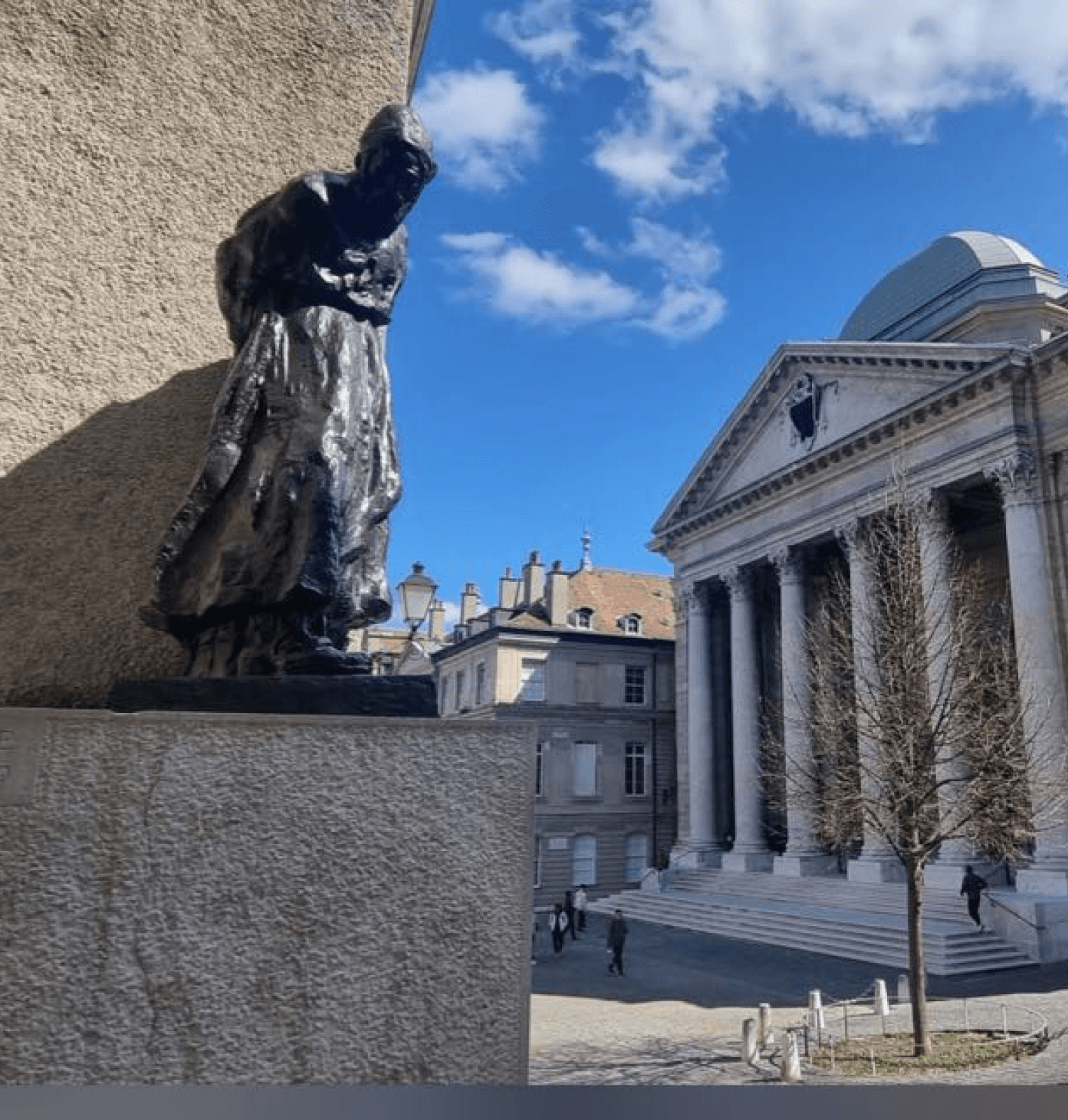
The third stage will be held at the Chapelle de l’Oratoire, about one hundred meters away, where the legacy of Henry Dunant and his contribution to the Spirit of Geneva will be discussed.
This symbolic journey will conclude with a crossing toward the Reformation Wall, followed by a reception at Downtown Studio, a pioneering collaborative hub in Geneva for the audiovisual and digital industries.
The relaunch event
On March 28, 2026, the first international conference on the Spirit of Geneva will unfold as an intellectual pilgrimage among three emblematic places connected to the figures who form the backbone of this tradition.
The first stop will be the International Museum of the Reformation, where participants will explore the legacy of John Calvin and the Reformers in shaping the Spirit of Geneva.
The second will take place at Maison Rousseau et Littérature, just a few dozen meters from the museum, where the conference will examine the intellectual and political legacy of Jean-Jacques Rousseau.
The third stage will be held at the Chapelle de l’Oratoire, about one hundred meters away, where the legacy of Henry Dunant and his contribution to the Spirit of Geneva will be discussed.
This symbolic journey will conclude with a crossing toward the Reformation Wall, followed by a reception at Downtown Studio, a pioneering collaborative hub in Geneva for the audiovisual and digital industries.
Join the Conversation
Join the conversation as we explore how the Spirit of Geneva can inspire a renewed vision for our shared future.
Values
Rigour - the same principles applied to all
Openness - the practice of the social contract
Compassion - universal compassion for the suffering of the world
Rigour - the same principles applied to all
Openness - the practice of the social contract
Compassion - universal compassion for the suffering of the world
Rigour
the same principles applied to all
Openness
the practice of the social contract
Compassion
universal compassion for the suffering of the world
Organizing Committee
Bruno Roche is the founder of the Economics of Mutuality, an open-source economic theory and management innovation developed during his tenure as Chief Economist of Mars Inc., in close collaboration with the University of Oxford. His books, Putting Purpose into Practice (Oxford University Press) and Completing Capitalism, have shaped the global conversation on rethinking capitalism and have both been published in China. He is the Founder and Co-Chair of ONE Society, a Geneva-based public-interest foundation advancing a new paradigm of value creation for a just economy and just society.
Christoph Stückelberger is a professor of global ethics and founder of three foundations in Geneva: Globethics, Geneva Agape Foundation, and OikosInvest. He is the editor of the book “Calvin Global” in 2009 for the 500th anniversary of John Calvin, exploring Calvin’s global influence in economy, science, politics, and society. On a new multilateralism he authored 2022 the book Globalance towards a New World Order. A Handbook. Committed to Geneva as a global center, his work focuses on ethics, governance, and international dialogue.